Microinverters Vs. String Inverters: Which Is Right For You?
One of the most important decisions you will make when designing your solar energy system is choosing the type of inverter that best suits your needs. Should you go with a traditional string inverter system or upgrade to a more innovative microinverter system? This choice can be challenging, as each option has its own set of advantages and considerations.
While we have previously discussed the differences between microinverters and string inverters in our ‘How Solar Inverters Work‘ guide at the Solstice Solar Academy, this article will provide a more in-depth breakdown of these systems. By exploring the key features and benefits of each option, you can make an informed decision about which one is right for your installation.
Comparing Inverters Functionality
While both string inverters and microinverters serve the same primary purpose of converting direct current (DC) power from solar panels into alternating current (AC) for safe use in your home or transfer to the energy grid, they function differently in terms of how they generate this energy conversion.
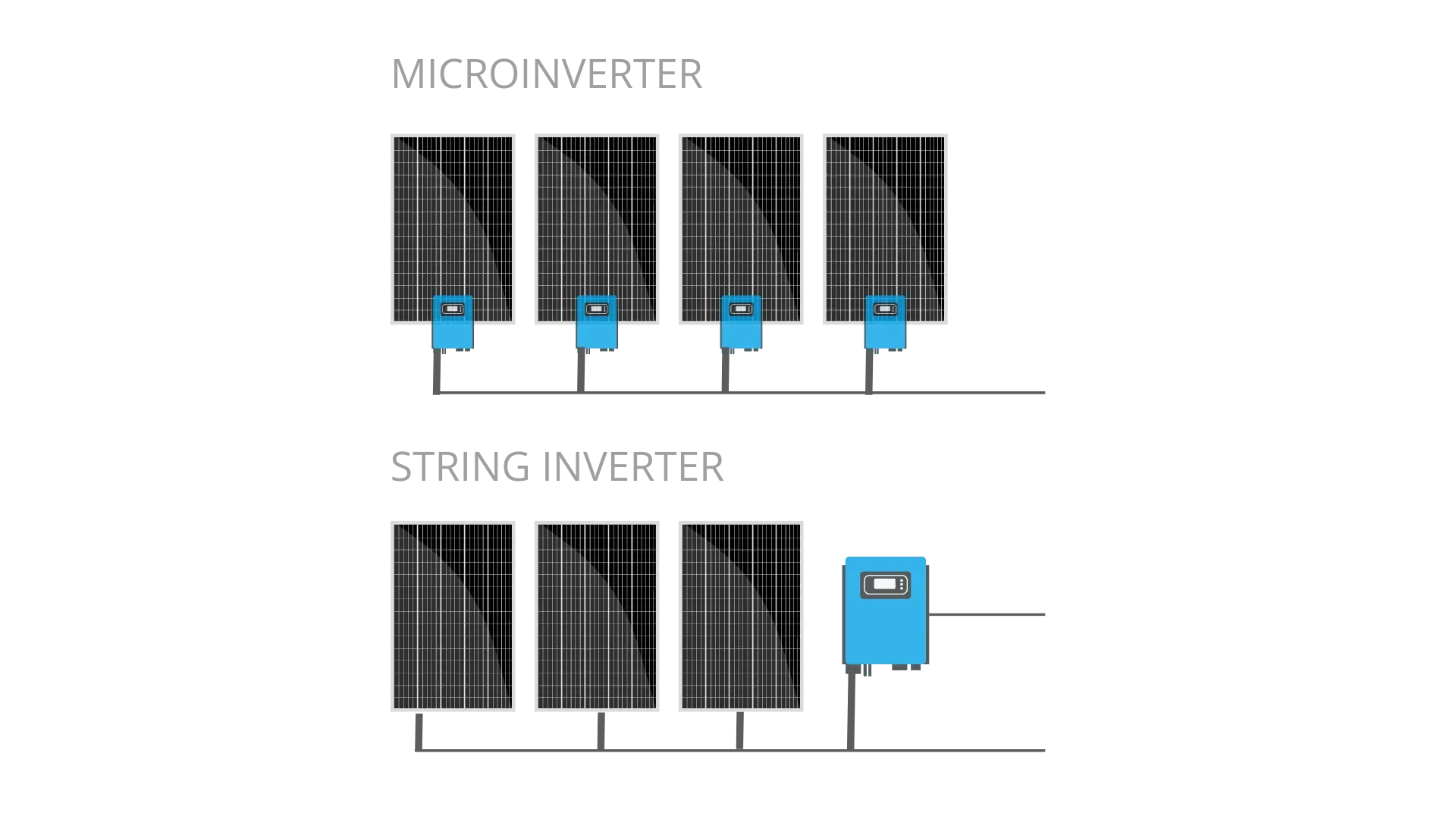
String inverters group solar panels together, wiring them to a single central inverter where the conversion from DC to AC takes place. This design treats the solar panels as part of a series, and the overall performance can be influenced by the output of individual panels in the string.
In contrast, microinverters allow each solar panel to operate independently. A microinverter is installed beneath each panel, converting the panel’s DC output to AC right at the source. This setup enables each panel to maximize its efficiency and reduces the impact of shading or other issues on the system’s overall performance.
Performance Analysis of Microinverters and String Inverters
When comparing string inverters and microinverters in an ideal scenario with sunny conditions, clean panels, and a perfect tilt, the performance difference between the two systems is unnoticeable. Both systems efficiently convert solar energy and provide consistent power output under these optimal circumstances.
However, microinverters offer a distinct advantage in locations with limitations or challenges. Since each panel has its own microinverter, the system can better manage variations in sunlight exposure due to shading, roof orientation, or obstacles like trees and buildings. This independent operation allows each panel to perform optimally on its own, even if other panels are shaded or performing below their potential.
While on the otherhand, string inverters process power from multiple panels wired together, which means that the performance of one shaded or dirty panel can negatively impact the output of the entire string. This sensitivity to variations can result in a loss of overall efficiency and reduced energy production in less-than-ideal conditions.
Solar Panel Placement & Layout
The performance differences between string inverters and microinverters lead to another key consideration, which is how the inverter type influences the design layout and panel placement. Microinverters offer greater flexibility in solar panel placement and design, allowing for versatile installations on complex roofs or in unique configurations without major performance loss. This makes them a strong choice for challenging environments where string inverters might struggle to provide consistent results.
Conversely, if your location is free from limitations or obstacles that might impede energy generation, a string inverter system may be an ideal choice. In such perfect conditions, a string inverter efficiently manages power output from multiple panels connected in a series, offering effective energy conversion without the need for the additional adaptability of microinverters.
Monitoring Energy Efficiency and Troubleshooting
Monitoring your solar system’s energy efficiency and generation is important for troubleshooting any issues early and addressing them promptly. However, string inverters have all the panels connected together, making it challenging to pinpoint problems with specific panels. In contrast, microinverters offer monitoring and diagnostics at the panel level, enabling quick identification and resolution of issues with individual panels.
Solar Inverter Maintenance
This leads us to our next factor to consider when choosing an inverter type, which is maintenance concerns. Given that both systems are different in how they generate energy and the placement of the inverters, this leads to different approaches to maintenance.
Microinverters are reliable and have a long lifespan, but it’s important to note that since the solar inverters are positioned under each panel, this placement allows for easier installation, but can complicate maintenance since replacing a microinverter often requires accessing the rooftop solar array and might involve temporarily removing a panel. On the other hand, replacing a string inverter is usually a simple process that can be done quickly at ground level, since the maintenance personnel can easily swap out the old unit for a new one.
Cost Comparison
A significant consideration for homeowners and businesses planning their solar energy system is the cost difference between string inverters and microinverter systems. Initially, traditional string inverters are more budget-friendly compared to microinverters. However, in the long term, string inverters may become more expensive if they need to be replaced during the system’s lifespan. This is because the entire string inverter setup may require changing, potentially leading to higher replacement costs. In contrast, with microinverters, you would only need to replace one inverter at a time, minimizing replacement expenses and overall long-term costs.
In conclusion, deciding which type of inverter is best for you depends on various factors such as your roof’s shape, available space, and shade. We recommend consulting with our team of experts or your chosen solar installer to weigh the pros and cons and find the best fit for your specific situation.